Too many tools. Too little clarity. Managing felt like chasing pieces.
So we built one quiet space a space that understands you, and moves at your pace.
Introduction
When Managing Feels Like Firefighting
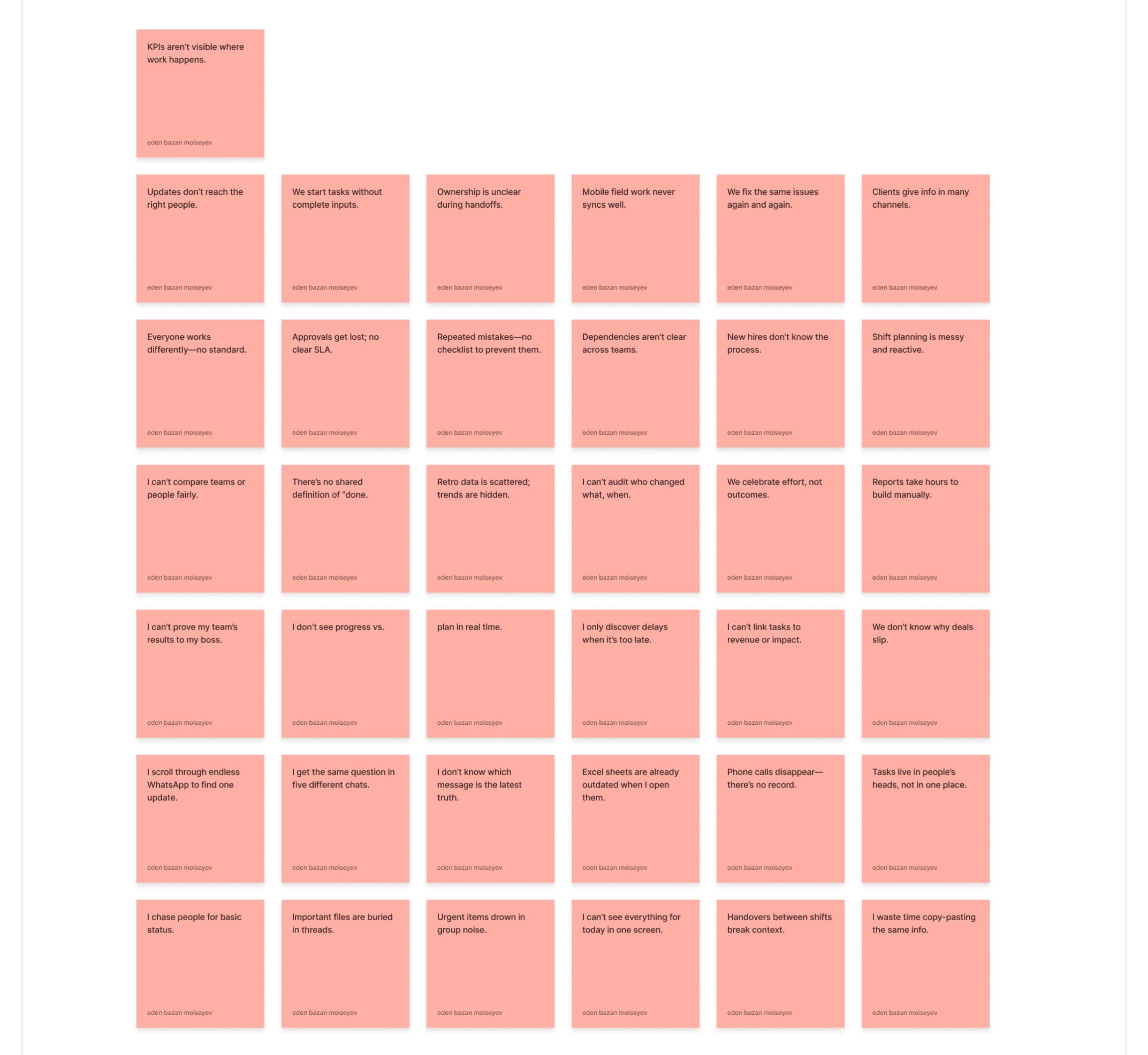
This line echoed across interviews. Managers weren’t leading with vision anymore they were buried in WhatsApp threads, scrolling at midnight for a single update.
Excel sheets were outdated the moment they opened them.
Simple tasks turned into endless follow-up calls.
Leadership had become less about strategy, and more about chasing scattered information.
Problem Discovery
Listening to Managers in the Field
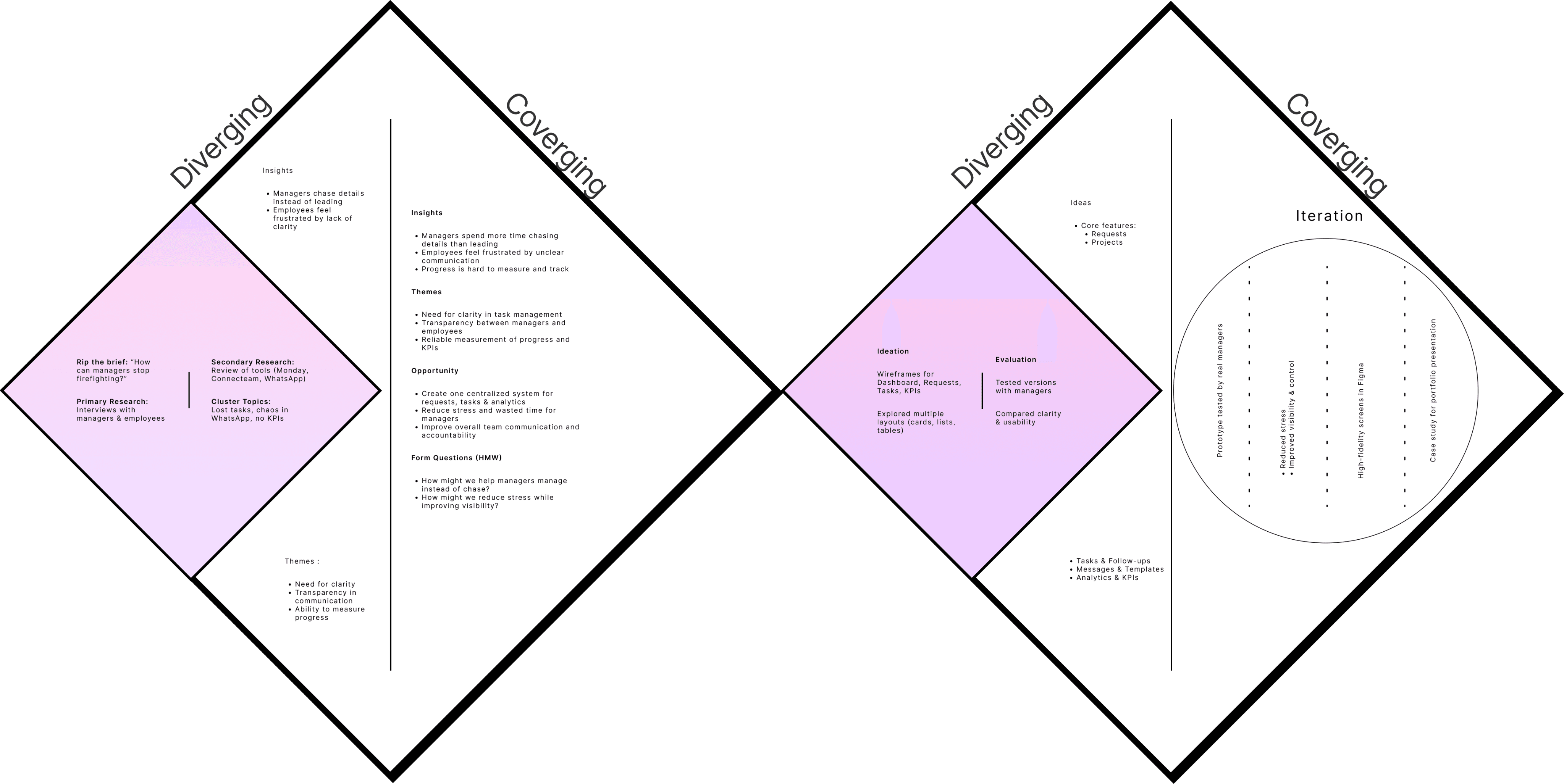
I used the Double Diamond model to guide my design journey.
The first diamond focused on understanding the problem through research and insights.
The second diamond centered on developing the solution with ideation, prototyping, and testing.
This process turned chaos in team management into a clear, validated solution.
User Research
Listening First
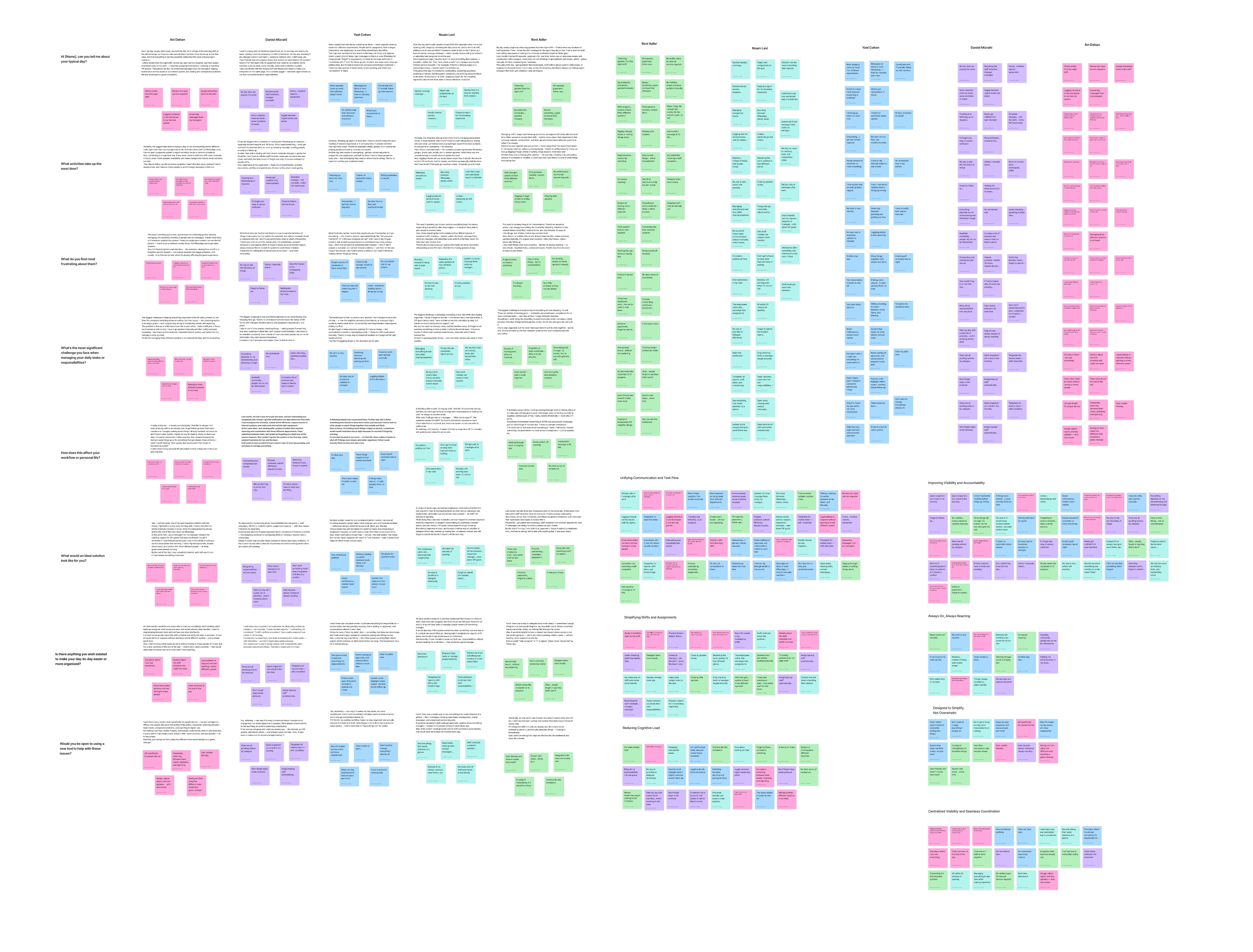
I interviewed 7 managers (including senior leaders) and 5 employees to capture their daily struggles.
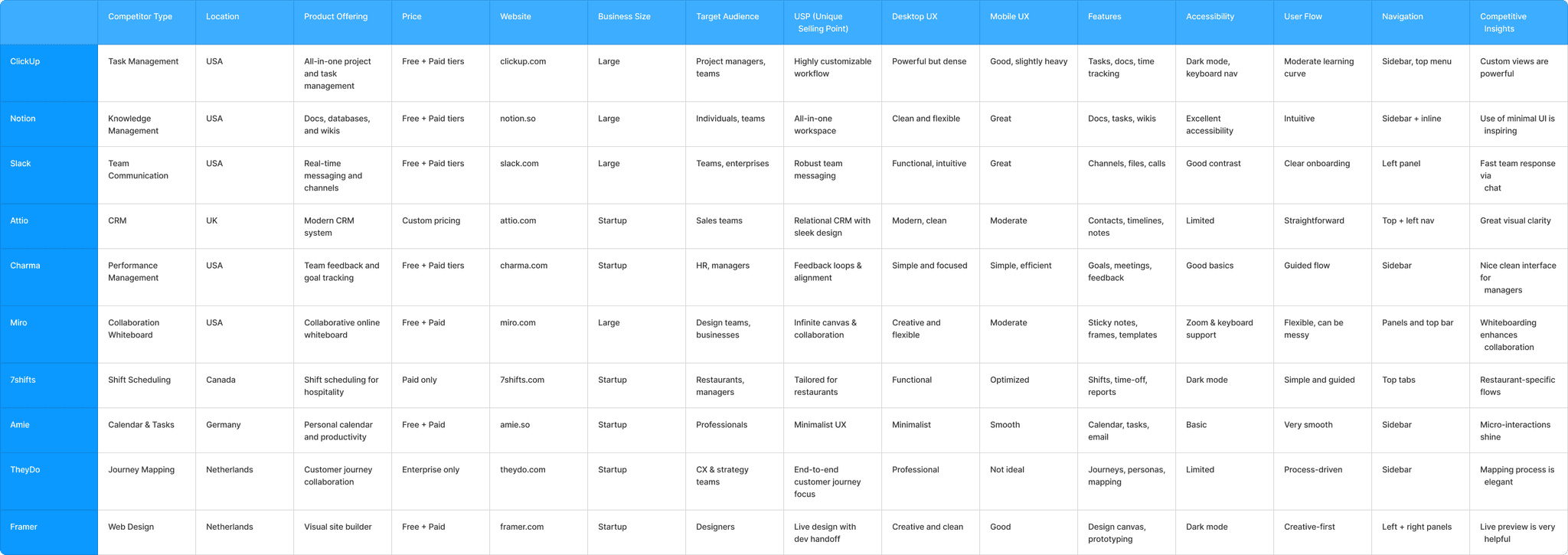
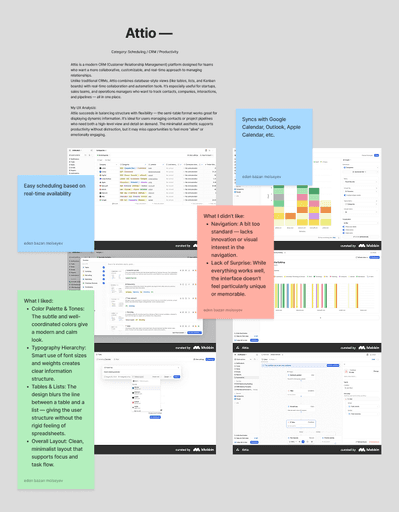
Through journey maps, empathy maps, and tool comparisons, I uncovered the real pain points: chaos, overload, inconsistency, and blind measurement.
This research showed me one clear truth: managers don’t just need efficiency
they need peace of mind.
“I know my team works hard but I can’t prove results to my boss.”
Problem Discovery
When Leadership Turns to Chaos
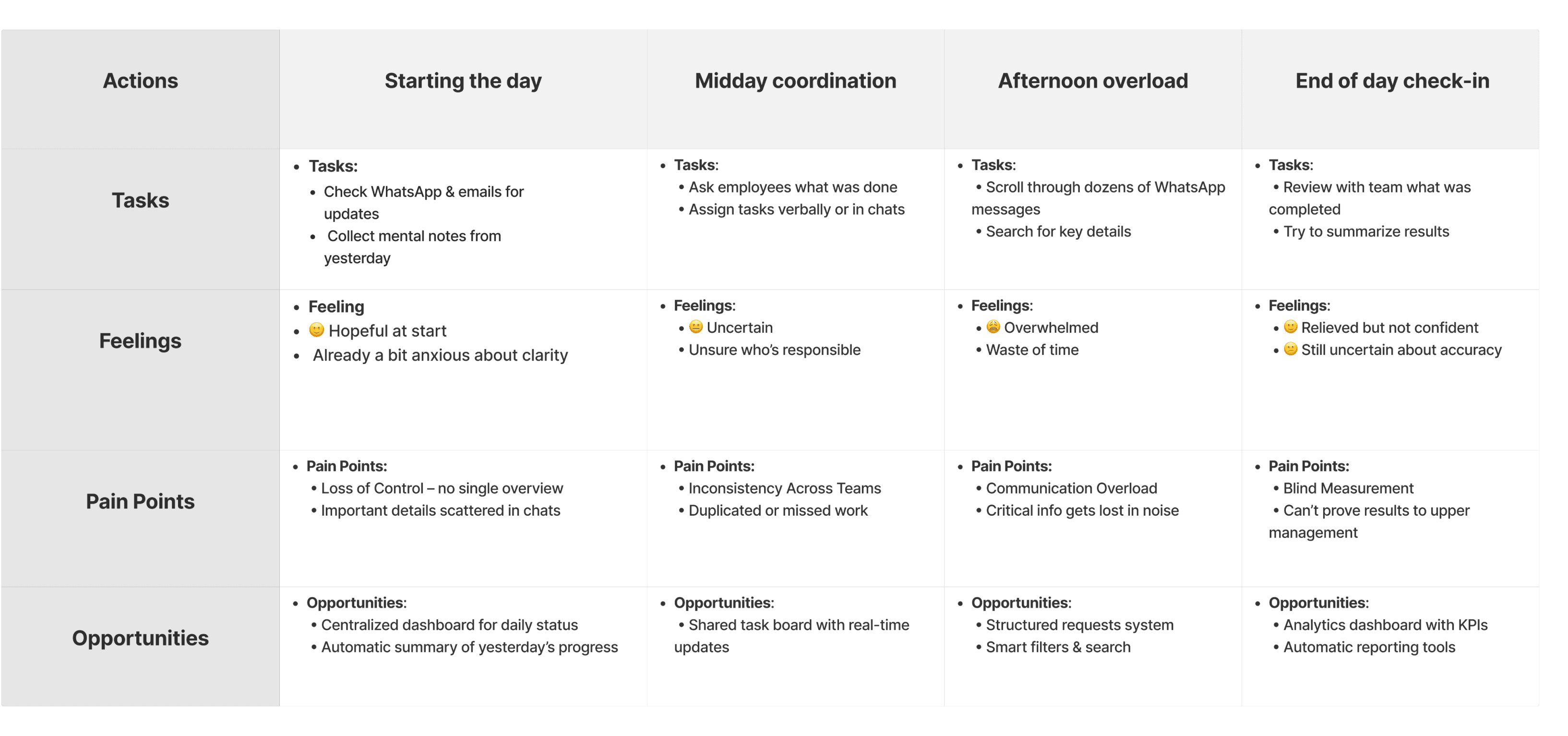
This journey map shows how managers currently work: the actions they take, their feelings, and the pain points they face.
It reveals opportunities for solutions that reduce chaos and rebuild trust in daily team management.
Users
Meet Haim
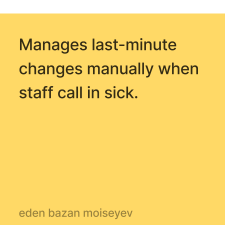
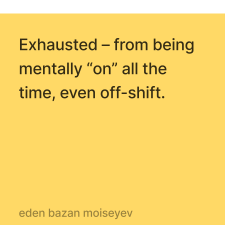
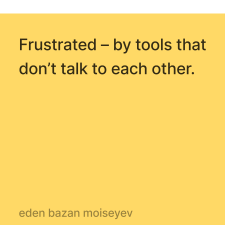
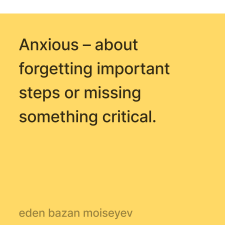
Haim, a team lead of 15 in Tel Aviv, found himself drowning in scattered updates, no visibility, and endless chasing.
He left not because he couldn’t lead, but because the systems failed him.
Our research shows managers lose 5–8 hours a week just on follow-ups costing companies thousands every month in wasted time and miscommunication.
“Some days I felt like I was working for the system not for the progress.”
Haim
Team Lead, Etgar Nol Architects Tel aviv
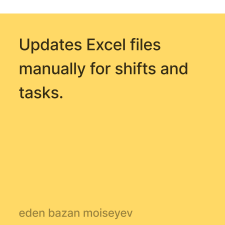
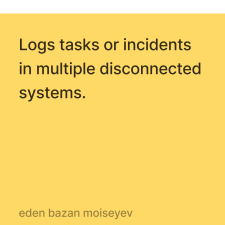
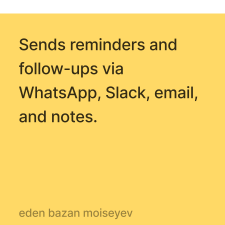
DOES
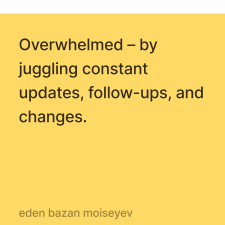
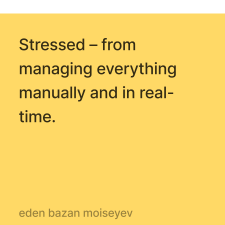
FEELS
SAYS
THINKS
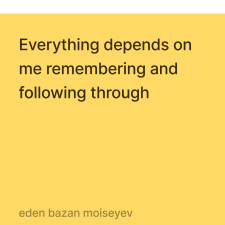
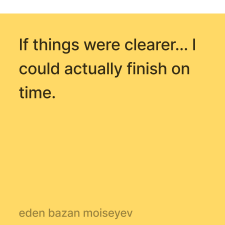
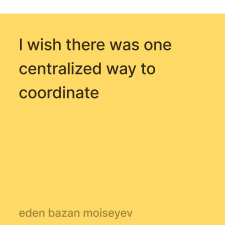
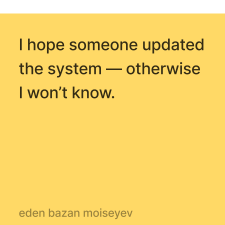
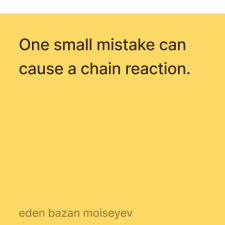
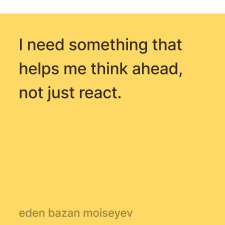
Problem Discovery
When Leadership Turns to Chaos
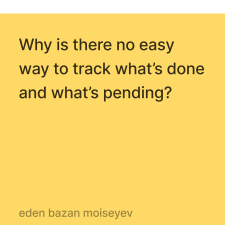
Rather than rushing to solutions, I reframed the problems into “How Might We” questions
Defining the Challenges
How Might We?
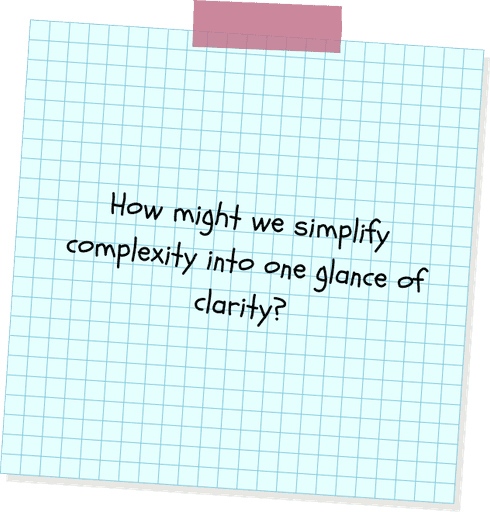
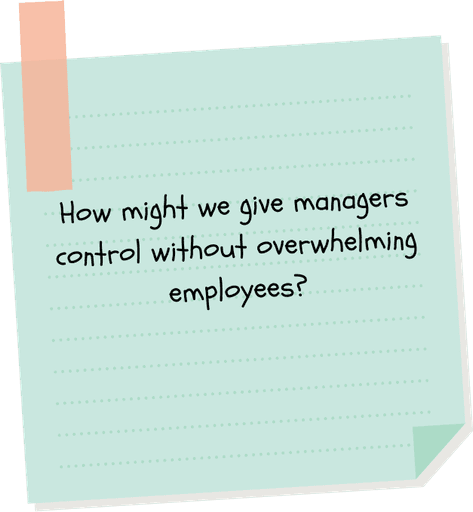
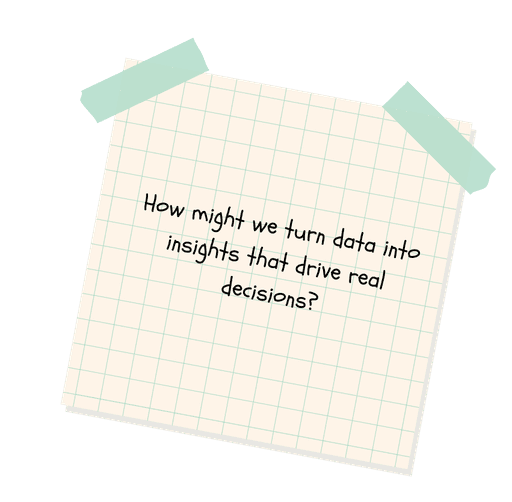
Rather than rushing to solutions, I reframed the problems into “How Might We” questions:
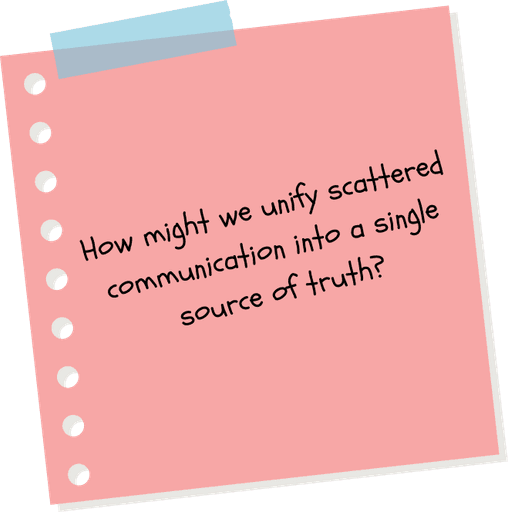
How might we unify scattered communication into a single source of truth?
Each question opened multiple design directions. For example, the idea of alerts came directly from the need for clarity at a glance, while templates emerged as a response to overloaded communication.
KPIs
Designing for Impact
From the start, the system was built around measurable KPIs:
40% faster search
70% fewer errors
55% better task tracking
Deal closures up from 18% → 27%
6 hours saved per manager weekly
Any feature that didn’t push these forward ,was cut.
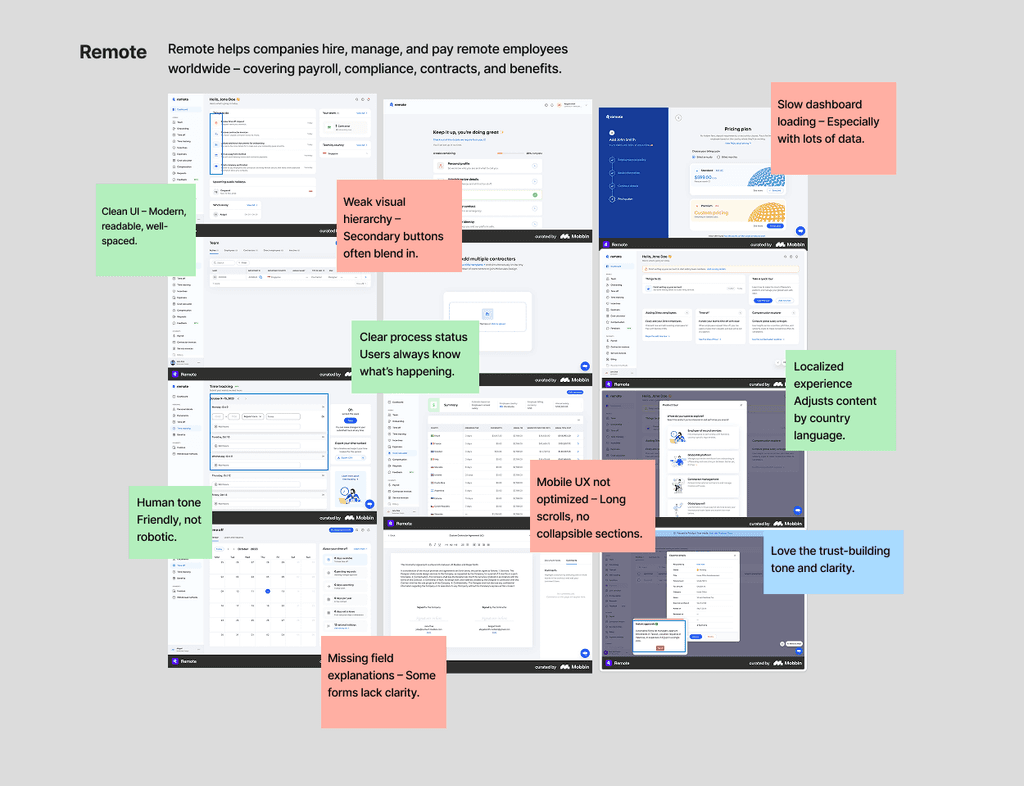
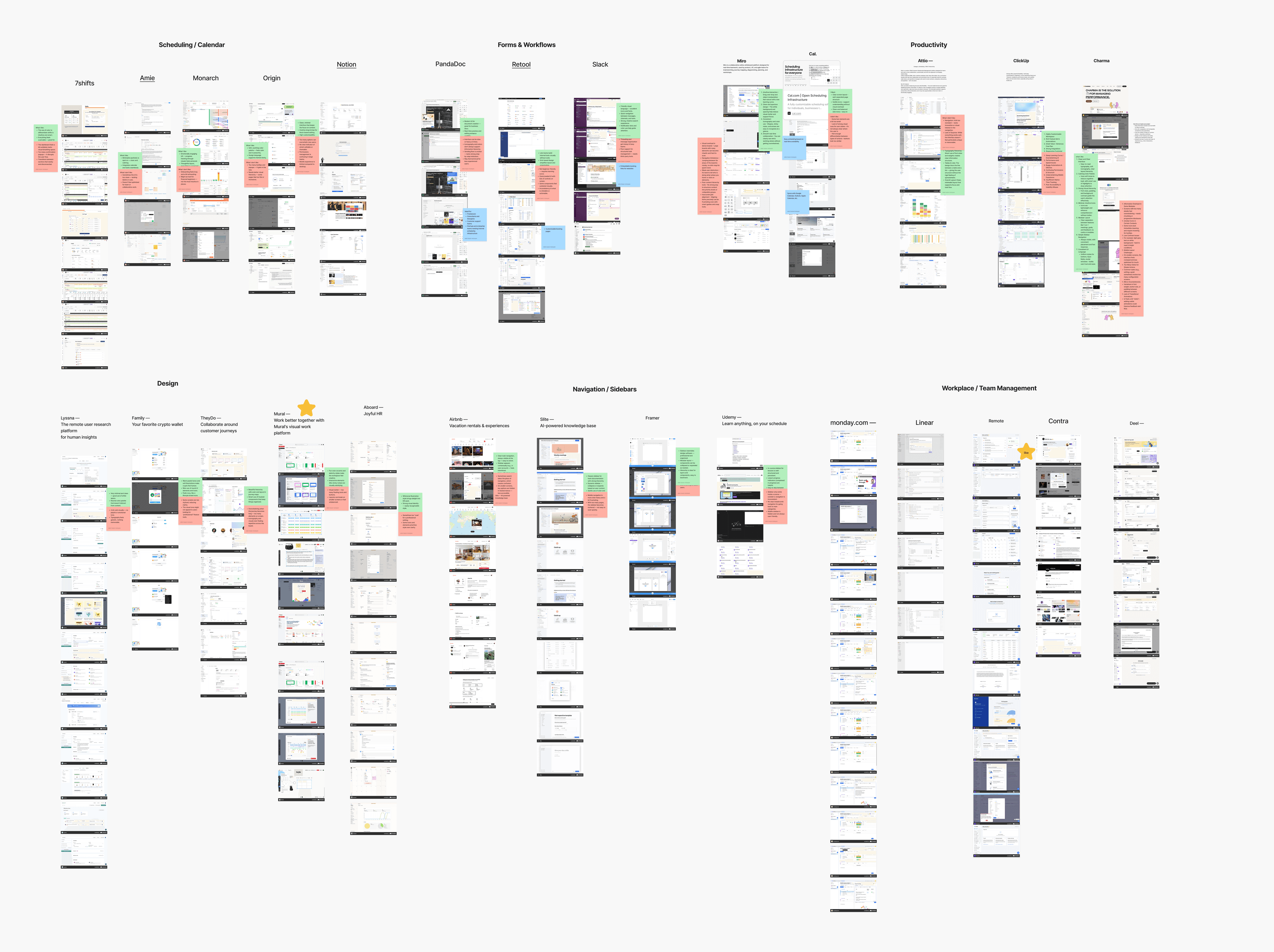
Competitive Analysis
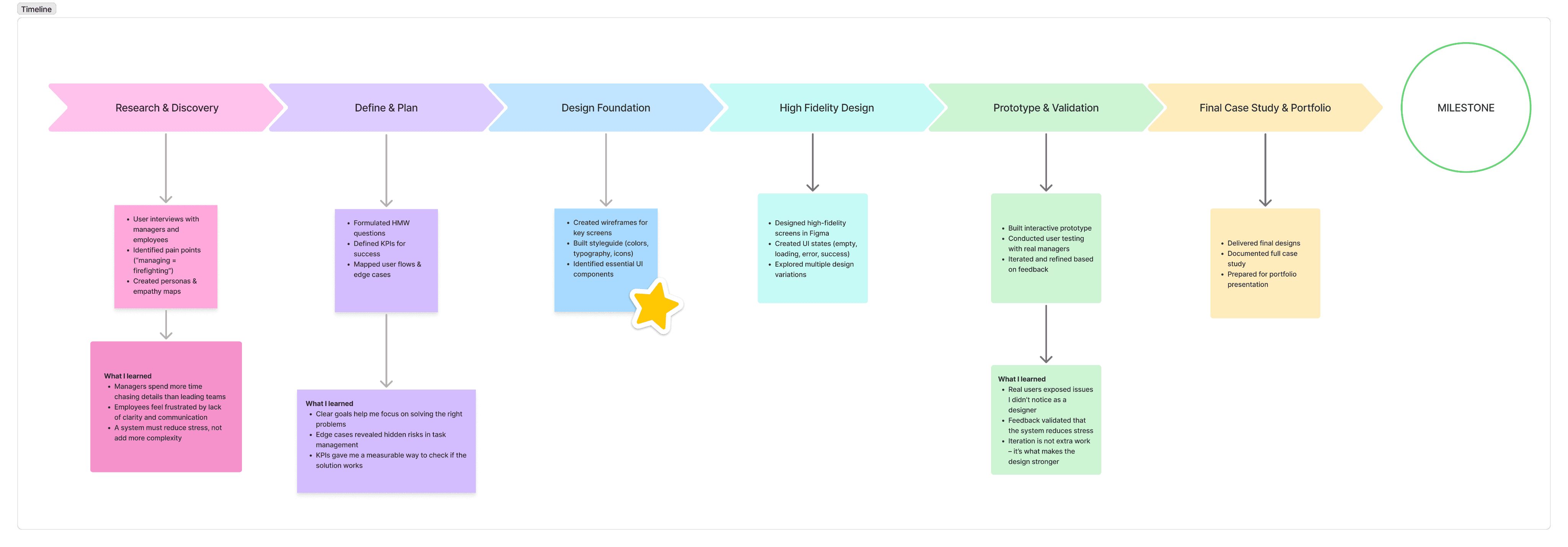
Design Process
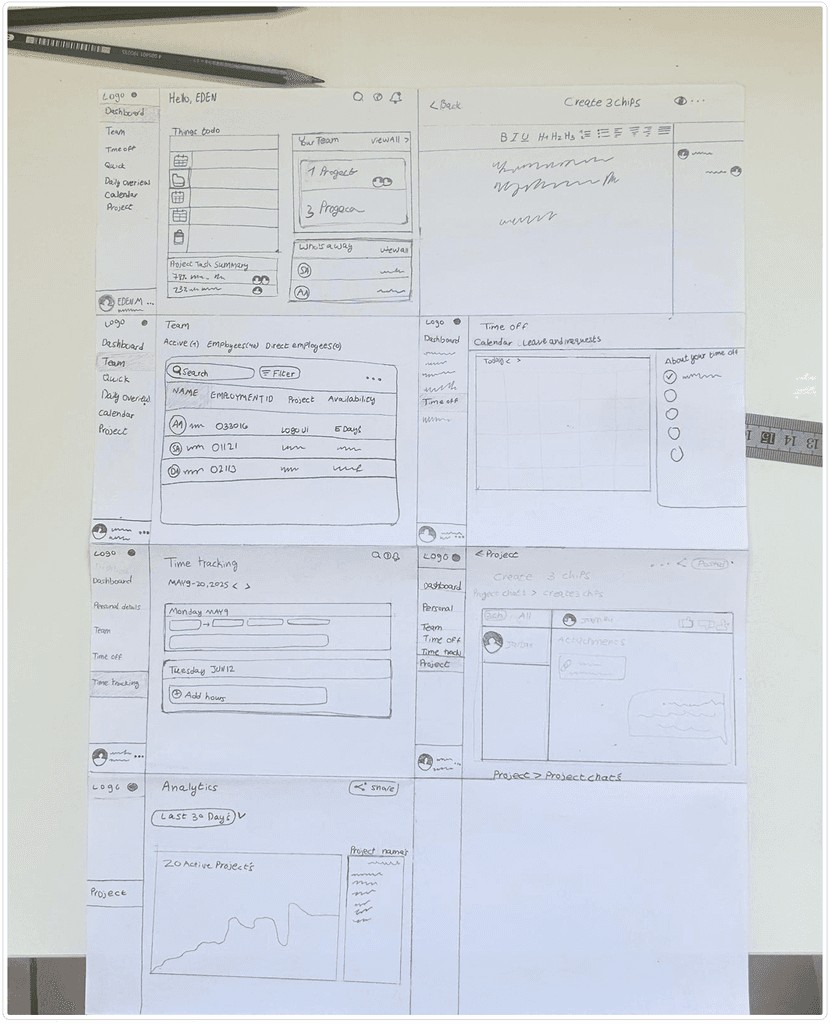
The design journey was iterative sketching, testing, failing, and refining.
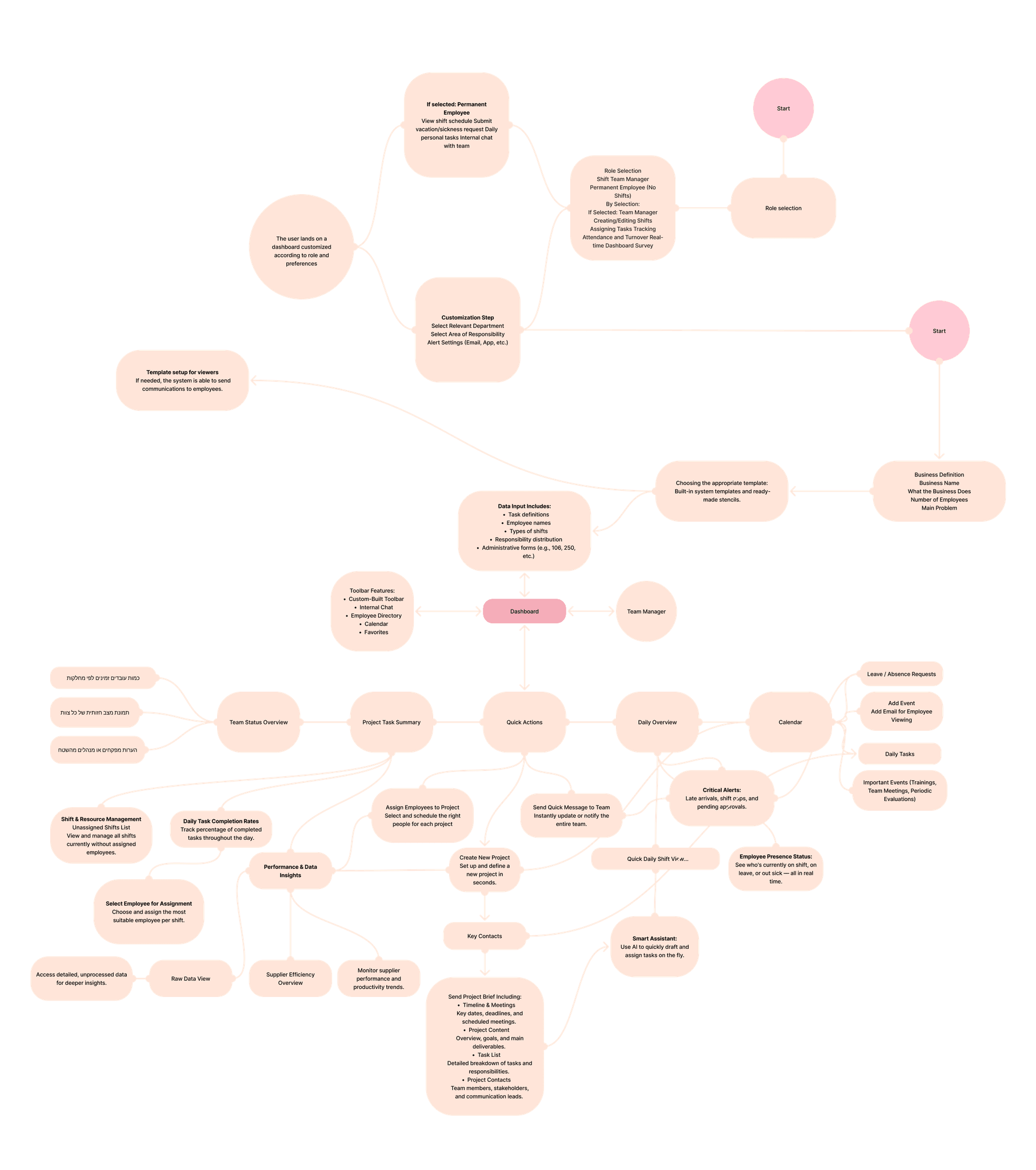
I built low-fidelity wireframes, mapped user flows (Login → Dashboard → Tasks → Messages → Reports), and tested with managers whose feedback shaped the product.
Temflow emerged as a real-time team management system that gives managers control and employees clarity reducing overwhelm and confusion.
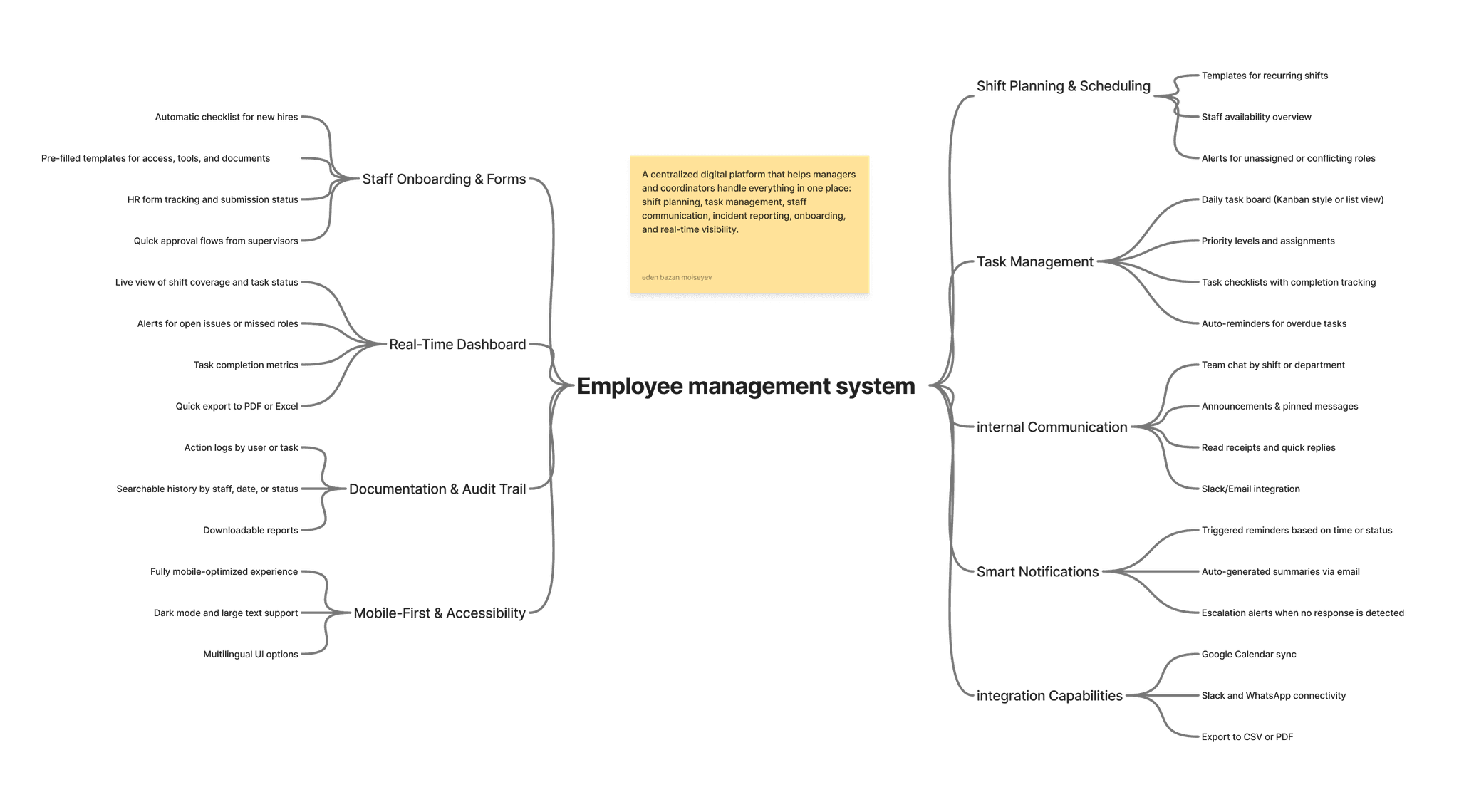
Final design
Dashboard
The home screen was built to cut through the noise. Instead of hunting for updates across chats, files, and endless calls, managers see everything that matters in one glance: who’s online, what tasks moved forward, where issues need attention.
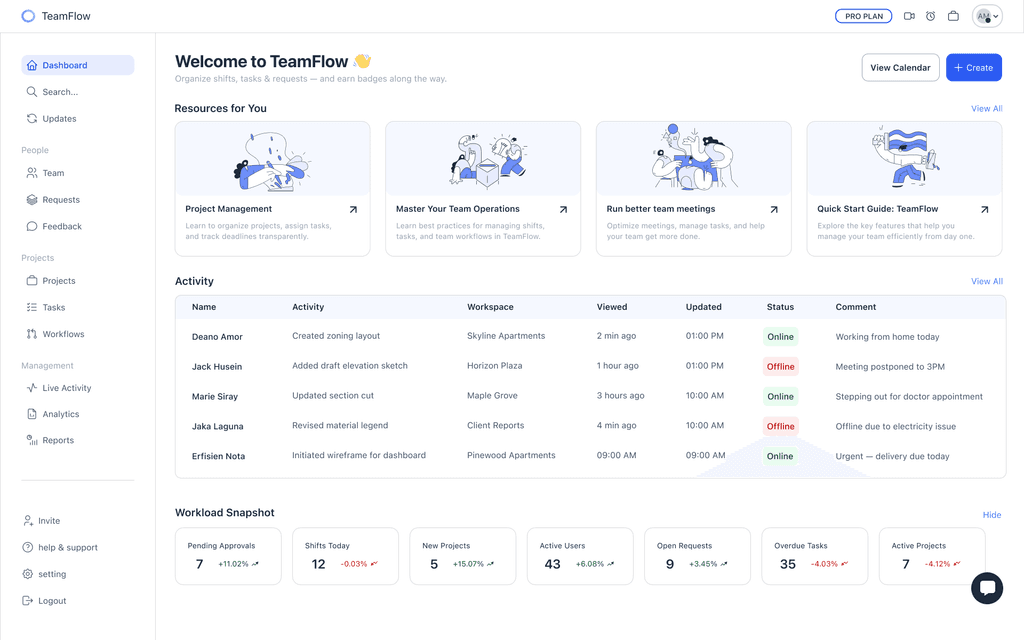
Final design
turning activity into insight
Track key metrics like completed tasks, shift coverage, and late rates in real time.
Clear charts turn raw activity into trends that guide smarter decisions.
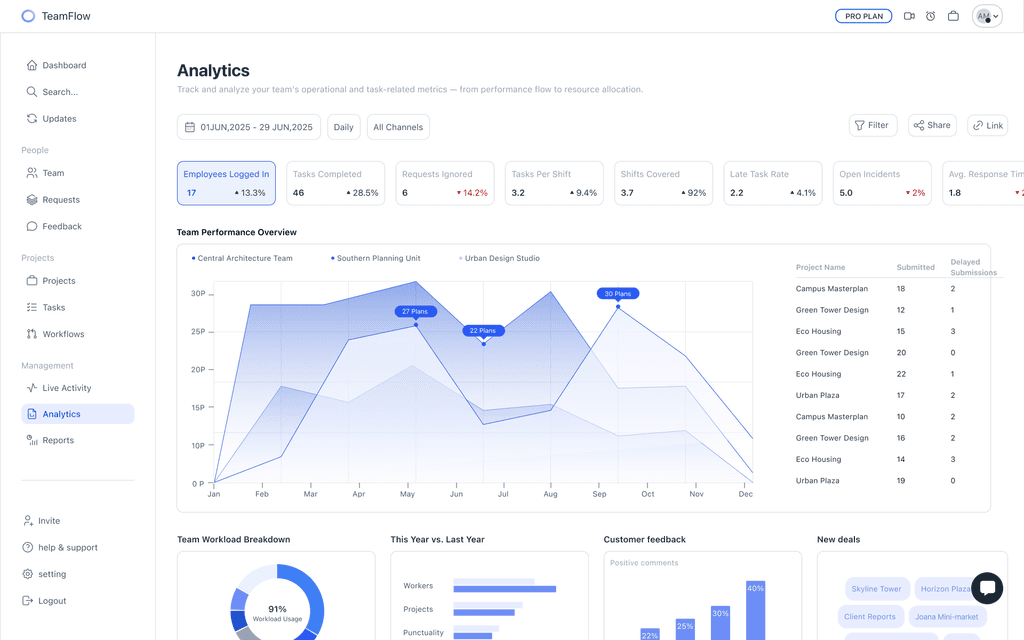
Final design
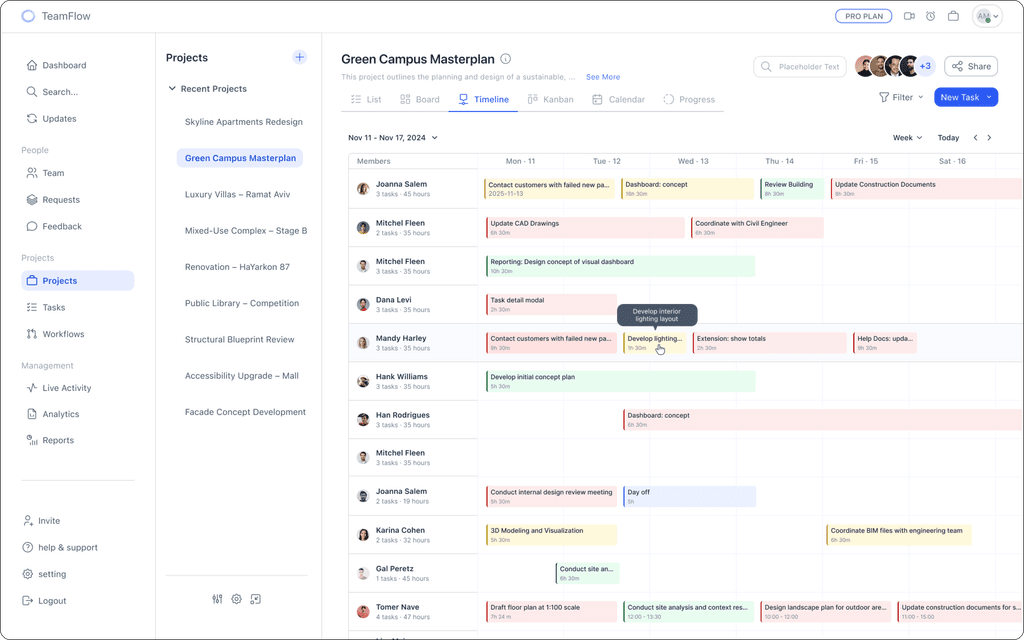
Project Timeline
The screen displays all team members and their tasks on a weekly timeline.
Colors indicate status (in progress, completed, delayed), while hover reveals task details.
Managers can quickly spot overlaps and bottlenecks, and team members see a clear picture of their priorities.
Final design
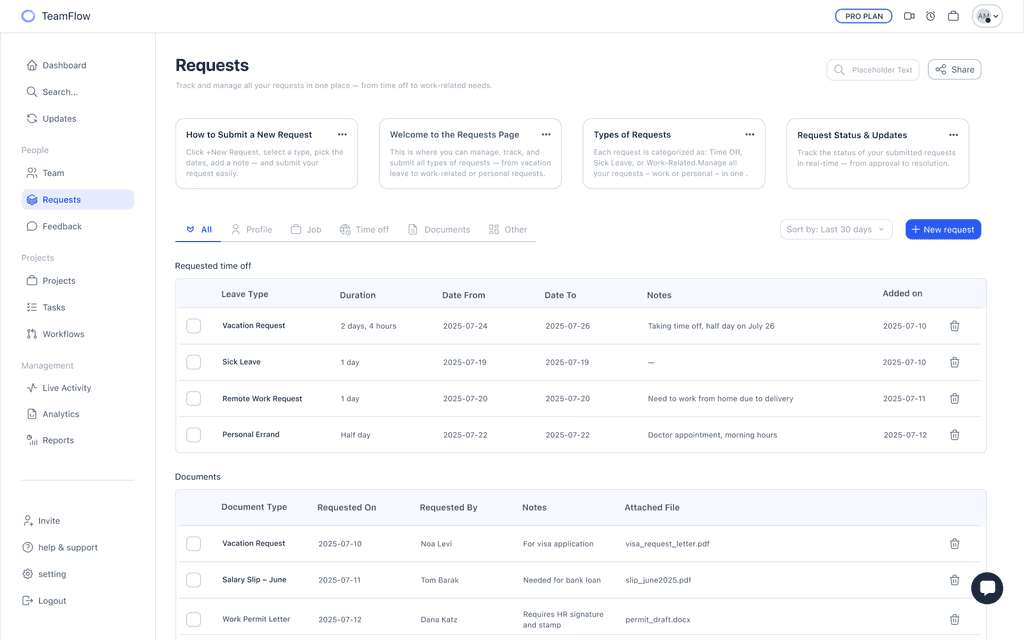
All In One Place
Manage every request vacation, sick leave, remote work, and documents in a single view.
Clear details and attached files keep the process simple, fast, and transparent.
Final design
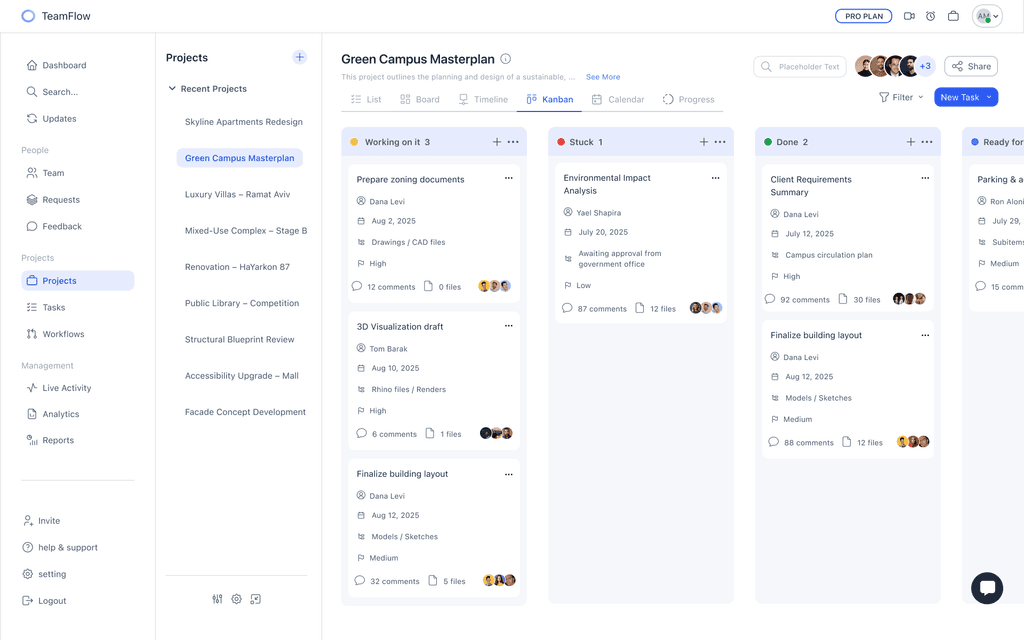
Kanban
The Kanban board show tasks by status. Each card displays key details owner, due date, priority for full context at a glance. It's easy to track progress, spot bottlenecks, and celebrate wins.
Final design
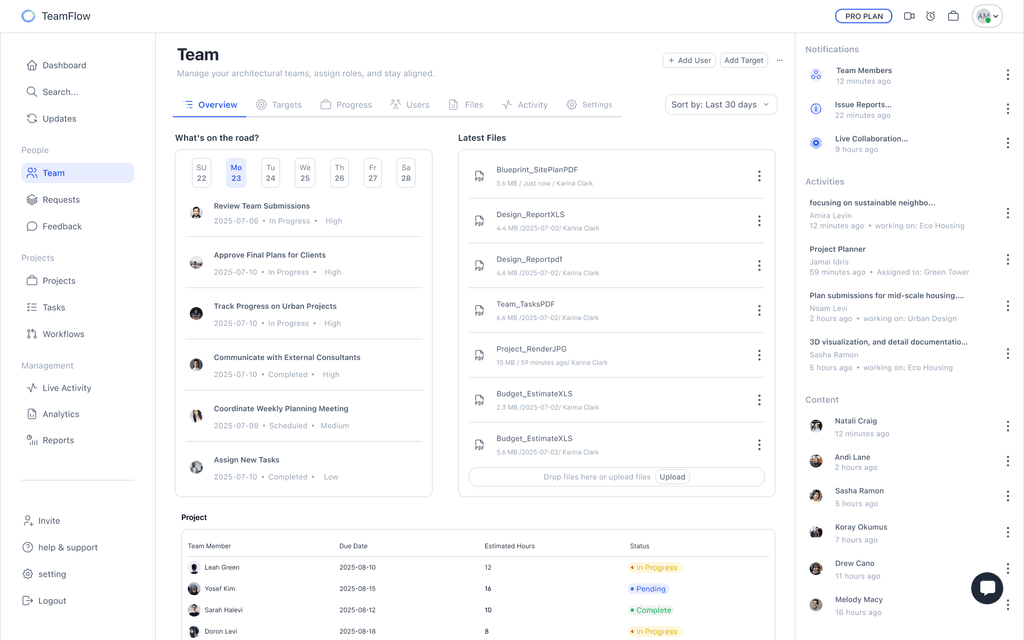
Team – stay aligned and in sync
The Team screen shows ongoing tasks, deadlines, and shared files in one place.
Managers track progress, assign roles, and keep everyone updated without losing context.
Final design
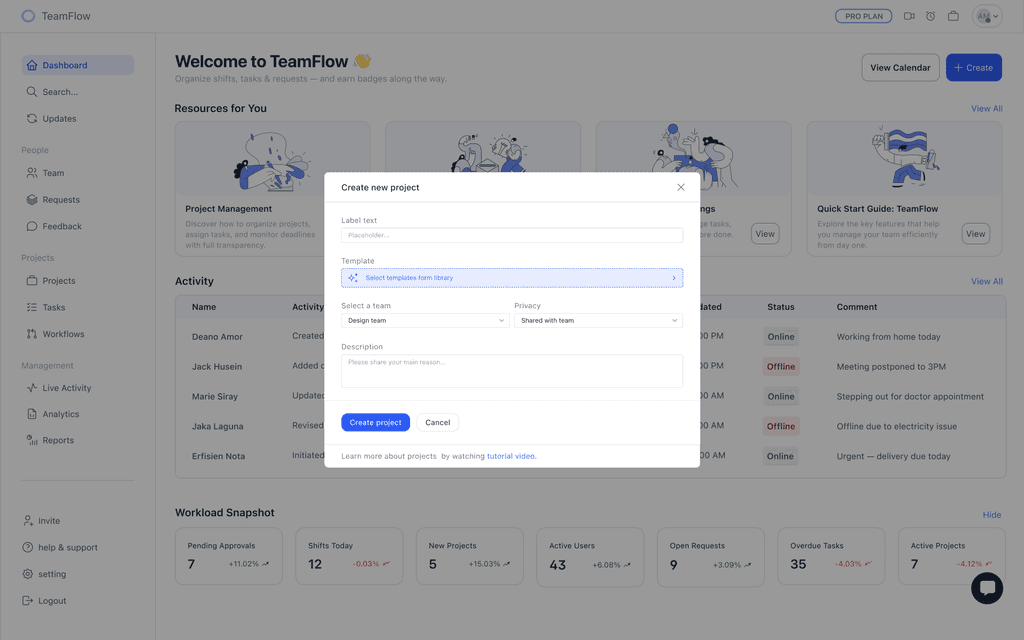
Create project
The modal lets users quickly set up a new project by adding a label, choosing a template, assigning a team, and defining privacy.
Final design
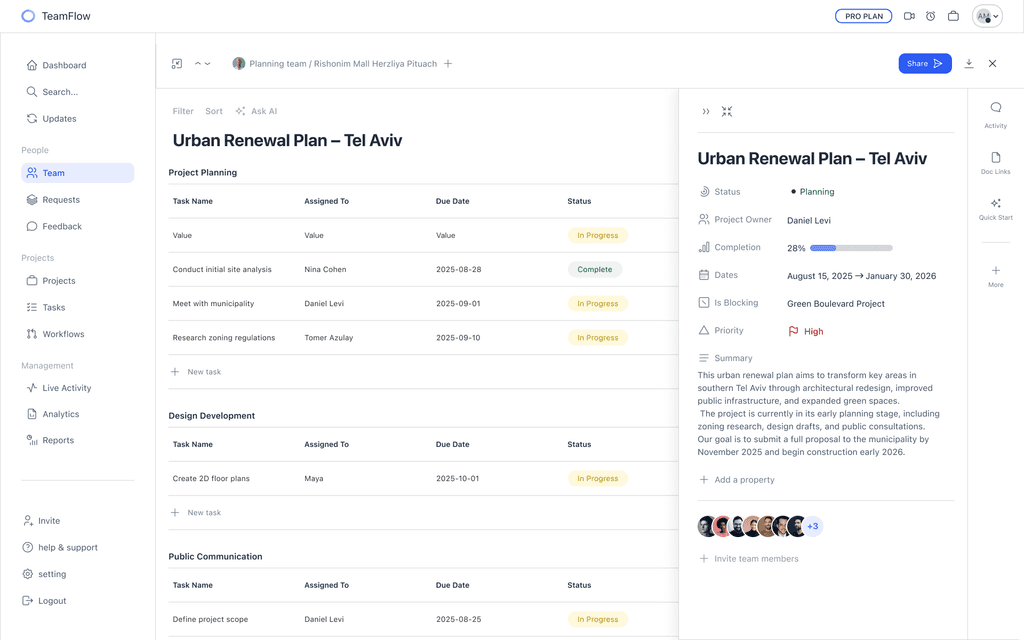
full context in one screen
The Project View brings everything about a project into one place:
Task list by sections (Planning, Design, Communication) with owners, due dates, and statuses.
Sidebar summary showing project owner, progress %, key dates, priority, and blockers.
Description field for context and goals, so everyone understands the bigger picture.
Team section to see who’s involved and invite new members.
This layout combines detailed task tracking with a high-level overview, helping teams stay aligned and avoid missing critical information.
My Takeaways
What I Learned (and Unlearned)
This project showed me that design is not about more features, but about clarity.
My success was turning messy workflows into one simple system that gave managers peace of mind.
I failed when I tried to solve too much at once, and learned to keep only what really helps.
If I could improve, I would focus more on mobile first for people working in the field.
In the end, I grew as a designer who listens, adapts, and learns from mistakes.